Class 6HistoryRecommended
Class 6 History (Social Science)
Prelims · GS1 Ancient India
Your first look at early humans, the Harappans, the Vedic age and the first kingdoms. Read it like a story to build a timeline in your head.

Study Nest IAS – Your Partner in the UPSC Journey. At Study Nest IAS, we believe every aspirant deserves the right guidance, structured preparation, and personalized mentorship to achieve their civil services dream. Through expert-led PSIR Optional classes, one-on-one mentorship, answer-writing evaluation, and quality learning resources, we help aspirants prepare smarter, stay focused, and move closer to success. Your Aspirations. Our Guidance. Your Success.


Every NCERT that matters for the Civil Services Examination, from Class 6 to Class 12, in one place. Filter by class or subject, see which books matter most for Prelims and Mains, and download each one from NCERT’s own website.
Before you open a coaching module or a reference book, finish the NCERTs. Here is why they matter.
Standard reference books assume you know what NCERTs teach. Skip them and the bigger books feel twice as hard.
Many Prelims questions in History, Art & Culture, Geography and Environment are built on lines you will find in these books.
NCERTs explain hard ideas in plain words. That is exactly how a good Mains answer should read.
Every book is published by NCERT and free to download. No need to buy anything to start.
Pick a class or a subject, or search by GS paper. Tick off each book as you finish it and watch your progress grow.
Your first look at early humans, the Harappans, the Vedic age and the first kingdoms. Read it like a story to build a timeline in your head.
A gentle start to medieval India: new dynasties, temples, towns, and the Delhi Sultanate and Mughals. Note the names of rulers and the reforms each one brought.
Company rule, 1857, colonial education and the national movement in simple language. This is the easiest entry point into Modern India.
The French Revolution, socialism in Europe and the rise of Nazism. These chapters give useful background for World History questions.
Nationalism in Europe and India, the making of a global world and print culture. The chapter on nationalism in India is high-yield for both stages.
Empires, industrialisation and the displacement of indigenous peoples. Read it selectively once your Indian History base is ready.
Harappa to the Mughal court to the making of the Constitution, all in three parts. Read them with a map and a timeline sheet next to you.
Rock art, Mauryan pillars, stupas, temples and early sculpture. Prelims often picks details straight from these chapters, so read the image captions too.
Textiles, metal craft, pottery and regional craft clusters. Skim it for map-based and craft-name questions.
Miniature painting schools, Mughal and Rajput art, and modern Indian art movements. Make a one-page chart of the painting schools.
The history and economy of Indian crafts. An optional read for building content on cultural heritage.
Latitudes, longitudes, motions of the earth and major landforms. Get these basics clear now and later chapters become much easier.
Interior of the earth, air, water and natural vegetation. Good for building the vocabulary that Class 11 assumes you know.
Land, soil, water, minerals and industries. Short chapters that connect directly to GS3 resource questions.
India's physiography, drainage, climate and vegetation. Read it with an atlas open: this is where mapping practice begins.
Resources, agriculture, water, minerals, industries and lifelines of the economy. Very useful for Prelims facts and Mains examples.
The two Class 11 books are the backbone of physical geography for UPSC. Make diagrams of every process you read about.
Population, settlements, economic activities and transport, for the world and for India. Read both books together, chapter by chapter.
Diversity, local government and how a village or city is run. A quick read if you are completely new to polity.
Equality, state government, media and markets. Light reading that builds basic civic vocabulary.
The Constitution, Parliament, the judiciary and marginalisation, explained in simple words. A good primer before standard polity books.
What democracy is, how the Constitution was designed, elections and institutions. Clear and short.
Power sharing, federalism, political parties and outcomes of democracy. Useful ideas for GS2 and essay writing.
The single most important NCERT for polity, along with the Political Theory book that PSIR aspirants will use again and again.
Cold War to globalisation, and India's political story after 1947. Strong base for International Relations and PSIR.
Poverty, food security and the story of a village economy. A friendly first step into economics.
Sectors of the economy, money and credit, and globalisation. Short and very relevant for Prelims.
Planning, the 1991 reforms, poverty, employment and sustainable development. Pair each chapter with the latest Economic Survey.
National income, money and banking, the government budget and the balance of payments. Learn the concepts once and current affairs will start to make sense.
Basic science around us. Read it only if your science base is weak.
Nutrition, weather, soil and simple physics. Optional, but quick.
Microorganisms, crops, conservation of plants and animals, and pollution. Several chapters link to environment questions.
Cells, tissues, diseases and natural resources. Focus on the biology chapters.
Life processes, heredity, electricity and our environment. The most useful school science book for Prelims.
Plant and animal kingdoms and classification. Pick only the chapters that matter for biodiversity questions.
The last unit on ecology and environment is a must for Prelims. Biotechnology chapters help with current affairs.
Only for aspirants who want a deeper science base. Most aspirants can skip these.
Read selectively, such as semiconductors or polymers, when a topic shows up in the news.
Key sociological ideas and thinkers. Helps you write richer answers on society and social change.
Caste, tribe, family, inequality, and social movements. Directly useful for GS1 society questions.
Learning, memory, motivation and emotions. Useful background for GS4 and for aspirants with Psychology optional.
Self and personality, attitude and social influence. Ties in well with the attitude and emotional intelligence topics in GS4.
A suggested sequence for a first full reading. Your own pace may differ, and a SWOT session can tailor it to you.
Start with the school books that tell the story simply. Do not take heavy notes yet.
Move to Class 11 and 12. These carry most of the weight for Prelims and Mains.
Revisit your markings, link each chapter to previous year questions and current affairs.
On the first reading, just understand the story. Make notes only in the second round, when you know what matters.
Every place in History and Geography should be found on a map. It turns facts into pictures you remember.
Look at previous year questions on a topic before you read it. You will notice what UPSC actually asks.
When a topic is in the news, go back to its NCERT chapter. This is how static and current affairs come together.
After each chapter, write two or three answers of 150 words. It builds the habit Mains demands.
One reading is not enough. Plan a second and third pass, each one faster than the last.
The books on this page are the current editions on NCERT's website. They are free, easy to get and enough to build your base for both Prelims and Mains.
Older editions, such as the earlier Ancient and Medieval India books, go deeper in places. Treat them as an extra, not a must, and use them for topics where the current books feel thin.
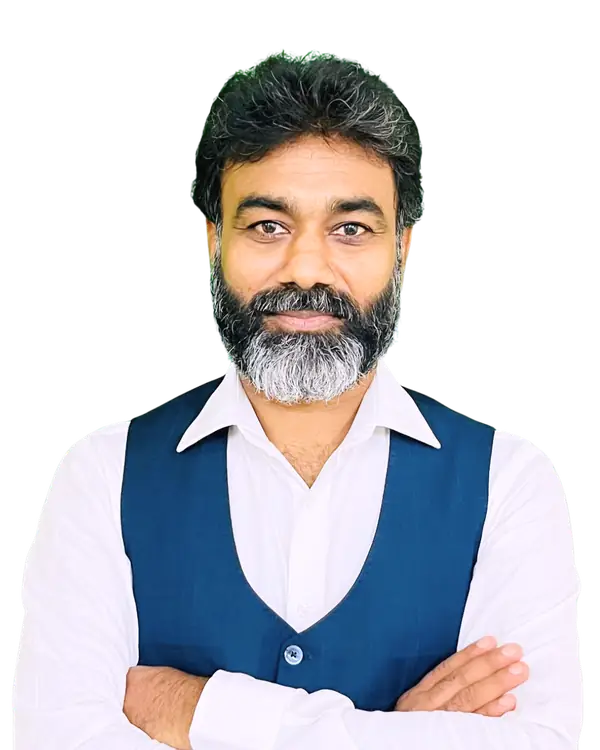
Not sure which books to put first? In a SWOT session, Kumar Gautam Sir looks at your strengths and gaps and tells you what to read, in what order.
Books give you knowledge. Guidance tells you what to do with it. Here is how Study Nest IAS can help.
A one-on-one session with Kumar Gautam Sir to find your strengths, gaps and the right next step, including what to read and when.
Ongoing personal mentorship that turns your reading plan into a weekly routine you can actually follow.
Explore ProgramAnswer writingEvaluate & ElevateGet your Mains answers read and marked line by line, so your NCERT knowledge shows on paper.
Explore ProgramOptionalPSIR OptionalIn-depth PSIR teaching for Paper I and Paper II. The Class 11 and 12 Political Science books are a great first step.
Explore ProgramMessage us on WhatsApp at +91 62076 69704 and we will help you plan your reading.
Chat on WhatsAppNo, but they are the foundation. NCERTs build your basic understanding. After them you will need standard reference books, current affairs and a lot of answer writing practice.
Start with Class 6 to 10 Social Science and Class 10 Science, then move to Class 11 and 12 Geography, Polity, History, Economics and Art. Use the Must-reads only filter in the library above to see the core books.
Read in the language you will write the exam in. NCERT publishes most of these books in both Hindi and English on its website.
Not on the first reading. Read once to understand, then make short notes in the second reading, focusing on what previous year questions show is important.
Every link opens the official NCERT website, ncert.nic.in, and downloads the book as a ZIP file of chapter PDFs. Study Nest IAS does not host or change these books.
For most aspirants, a first careful reading of the core books takes about 2 to 3 months. A SWOT Session can help you plan this around your own schedule.
Book a one-on-one SWOT Analysis Session with Kumar Gautam Sir for ₹1,500, inclusive of GST. Know where you stand and exactly what to read next.